VIP5.4.1HIEZ: Understanding the Structure, Purpose, and Digital Potential
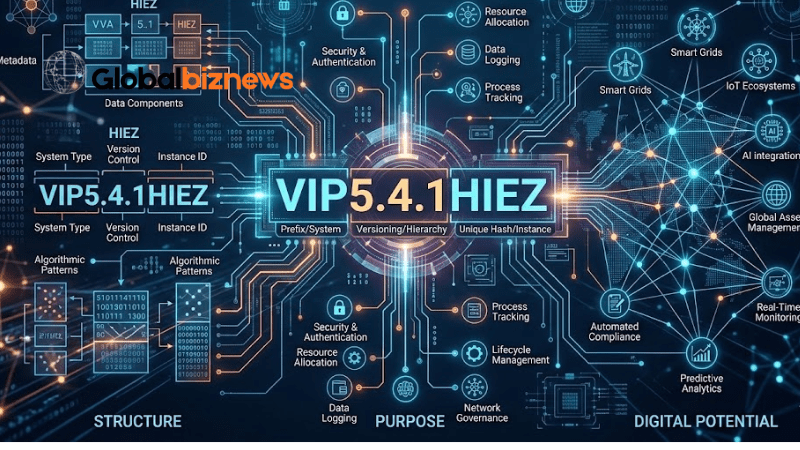
In the ever-evolving world of technology, software development, and digital platforms, structured codes and version identifiers play a crucial role in organizing systems. One such intriguing term is VIP5.4.1HIEZ. At first glance, it may appear to be a random combination of letters and numbers, but in modern computing environments, identifiers like VIP5.4.1HIEZ often carry layered meanings related to software builds, premium access systems, firmware releases, or internal configuration tracking.
Understanding VIP5.4.1HIEZ requires breaking down its structure and analyzing how similar naming conventions are used across digital ecosystems. Whether it relates to software, membership tiers, application builds, or encrypted modules, the format itself suggests an organized and version-controlled system.
Breaking Down the Structure of VIP5.4.1HIEZ
The identifier VIP5.4.1HIEZ can be divided into multiple segments:
- VIP
- 5.4.1
- HIEZ
Each section potentially serves a specific purpose.
The term “VIP” is commonly associated with premium access, exclusive privileges, or enhanced user status. In software environments, VIP may represent a premium subscription tier, an advanced user role, or special feature activation.
The sequence “5.4.1” resembles a typical software version number. Version numbering usually follows a structured format: major version, minor version, and patch update. For example:
- 5 – Major release version
- 4 – Minor feature update
- 1 – Patch or bug-fix revision
Finally, “HIEZ” could represent a build identifier, internal release codename, security hash fragment, or developer-specific tagging system.
When combined, VIP5.4.1HIEZ appears highly structured and deliberate rather than random.
VIP5.4.1HIEZ as a Software Version Code
One of the most likely explanations is that VIP5.4.1HIEZ represents a software version identifier tied to a premium feature set.
In software development, version numbers are essential for tracking updates, improvements, and compatibility changes. If VIP5.4.1HIEZ is a system version, it may indicate:
- A fifth-generation core platform
- Fourth major feature expansion
- First bug-fix patch
- HIEZ as a development build branch
Developers rely heavily on such structured codes to manage updates efficiently. Without clear versioning, tracking changes becomes chaotic.
Possible Use in Membership or Subscription Platforms
The presence of “VIP” suggests another possibility: VIP5.4.1HIEZ could represent a membership or subscription tier.
Many online platforms use tiered systems to offer different levels of access. VIP may indicate:
- Exclusive content access
- Advanced analytics tools
- Higher transaction limits
- Premium support services
In this context, VIP5.4.1HIEZ might represent the latest update to a VIP-level system module, ensuring enhanced functionality for premium members.
Role in Application Development
Modern applications—especially mobile and desktop platforms—rely on structured build identifiers. A term like VIP5.4.1HIEZ may appear in:
- Application update logs
- Developer dashboards
- Internal testing reports
- Beta release documentation
Developers often attach unique build codes to track test versions before public release. HIEZ may represent a specific development branch used during testing cycles.
Such identifiers help ensure that updates are stable and backward compatible with previous versions.
Security and Encryption Implications
Another possible interpretation is that VIP5.4.1HIEZ relates to system security.
Complex alphanumeric identifiers are frequently used in:
- Encryption modules
- Licensing validation systems
- Access control frameworks
- Secure authentication protocols
The final segment “HIEZ” could act as a shortened cryptographic reference, ensuring that the version cannot be easily duplicated or tampered with.
In secure environments, identifiers must be both precise and unique. VIP5.4.1HIEZ fits the format of a controlled system tag designed for traceability.
VIP5.4.1HIEZ in Gaming Environments
Gaming platforms also use structured version codes. A game patch or expansion update might be labeled similarly.
If VIP5.4.1HIEZ appears in a gaming context, it could represent:
- A VIP membership game client version
- A premium update package
- A server configuration build
- A special event release
Gaming systems often differentiate between standard and VIP builds, especially in online multiplayer environments where premium players receive additional perks.
Enterprise and Business Software Context
Enterprise-level software systems rely heavily on structured identifiers for tracking large-scale deployments.
In corporate environments, VIP5.4.1HIEZ might be:
- A server configuration version
- A CRM system update
- An ERP module patch
- A cloud platform deployment tag
Large organizations cannot rely on generic naming. They require detailed tracking codes to manage compatibility across multiple departments and devices.
VIP5.4.1HIEZ could serve as such a controlled deployment reference.
Importance of Version Control Systems
Identifiers like VIP5.4.1HIEZ are critical in maintaining order in software ecosystems.
Version control ensures:
- Stable rollbacks in case of errors
- Clear documentation of changes
- Easier debugging
- Accurate performance tracking
- Compatibility management
Without structured identifiers, software development becomes vulnerable to confusion and instability.
VIP5.4.1HIEZ demonstrates a format that aligns well with disciplined version management practices.
Why Unique Identifiers Matter
In digital systems, uniqueness prevents duplication and confusion.
If multiple versions share similar names, system conflicts may occur. A highly specific identifier like VIP5.4.1HIEZ ensures:
- Clear differentiation between builds
- Reduced risk of accidental overwrite
- Easier collaboration among developers
- Transparent communication across teams
Such identifiers are especially valuable in cloud computing environments where multiple system instances operate simultaneously.
Potential for Branding
Interestingly, VIP5.4.1HIEZ could also function as a product branding code.
Tech startups sometimes use internal codenames during product development phases. If VIP5.4.1HIEZ represents an early-stage product build, it could eventually evolve into a public-facing release name.
Many successful software products begin with structured identifiers before transitioning into simpler commercial branding.
Future Evolution of VIP5.4.1HIEZ
If VIP5.4.1HIEZ is part of an evolving system, future versions might follow similar patterns:
- VIP5.4.2HIEZ
- VIP5.5.0HIEZ
- VIP6.0.0HIEZ
This structured progression indicates long-term planning and scalable architecture.
Systems designed with structured version control are easier to maintain and upgrade over time.
Conclusion
VIP5.4.1HIEZ may appear complex at first glance, but its structure strongly suggests an organized system identifier used in digital environments. Whether connected to software development, VIP membership platforms, enterprise deployments, gaming systems, or secure authentication modules, its format aligns with professional version control standards.
The presence of “VIP” indicates premium-level functionality, while “5.4.1” follows recognized version numbering logic. The final segment “HIEZ” likely acts as a build tag, branch reference, or unique system marker.
In today’s digital world, identifiers like VIP5.4.1HIEZ are not random—they are carefully structured tools designed to maintain order, security, and scalability in complex systems. As technology continues to advance, such naming conventions will remain essential for tracking innovation and ensuring stable digital growth.