
Solar Panels TEAS Passage: Understanding Renewable Energy for Exam Success
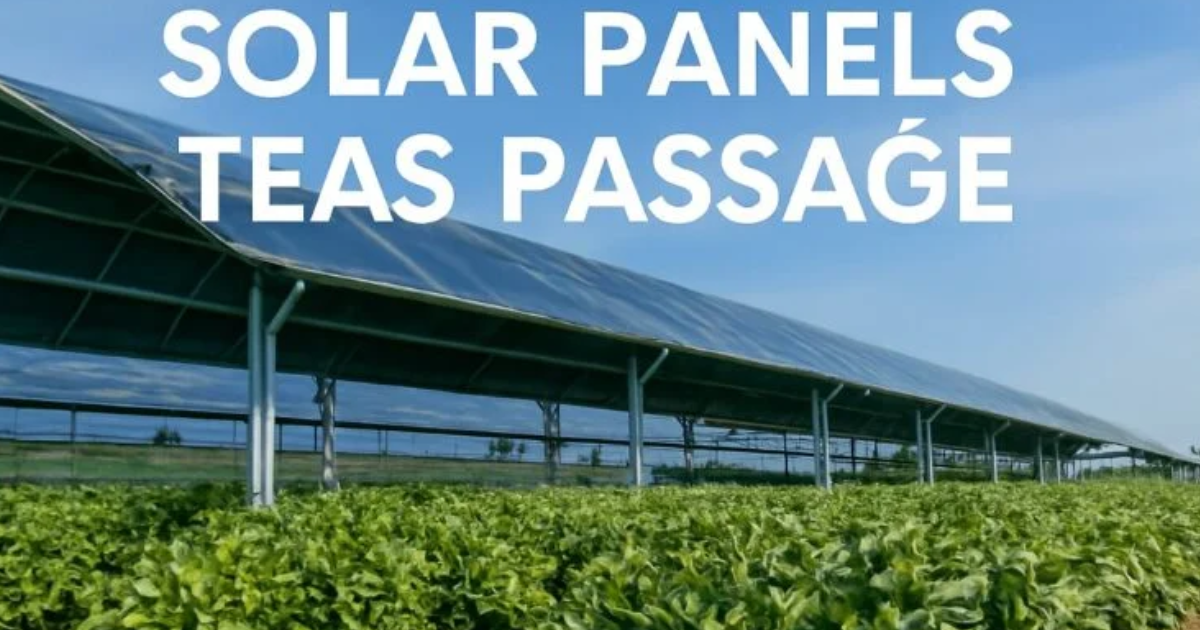
If you’re preparing for the Test of Essential Academic Skills—better known as the TEAS exam—you already know that the Reading section often includes short scientific passages followed by comprehension questions. One popular topic in recent TEAS reading practice is renewable energy, particularly solar panels.
A “solar panels TEAS passage” is designed to introduce essential science facts in simple language, test your ability to identify main ideas, interpret data, evaluate arguments, and infer conclusions. Beyond exam prep, solar energy is a fascinating real-world subject. So, this article will help you understand solar panels the way a TEAS reading passage would—clear, concise, and focused on comprehension.
Below is an expanded explanation of solar panels, how they work, their environmental impact, their benefits and drawbacks, and some sample-style questions. By the end, you’ll understand both the topic and the style of reading required for TEAS mastery.
What Are Solar Panels?
Solar panels are devices that convert sunlight into usable electricity. They are made of photovoltaic (PV) cells—tiny electrical units that absorb solar radiation and release electrons. When these electrons move, they create electric current.
While solar power sounds like a modern invention, the photovoltaic effect was discovered in the 1830s. Still, solar panels didn’t become commercially useful until the mid-20th century, when scientists realized that silicon—one of Earth’s most abundant elements—could be engineered into efficient solar cells.
Today, solar energy is one of the fastest-growing renewable energy sources on the planet.
How Do Solar Panels Work?
Solar panels work through a simple scientific process—the photovoltaic effect:
- Photons from sunlight strike a solar cell.
- The energy knocks electrons loose from silicon atoms.
- Conductive metal plates capture electron movement.
- Wires direct the flow of electricity for household use.
That electricity can:
- power lights
- run appliances
- charge electronic devices
- feed energy into a utility grid
Solar panels work best in direct sun, but they also operate under cloud cover. What matters most is annual sunlight exposure—not just hourly brightness.
Why Are Solar Panels Important?
A solar panels TEAS passage usually emphasizes environmental benefits. Solar power reduces dependence on fossil fuels like coal, oil, and natural gas—resources that produce greenhouse gases when burned.
Solar energy contributes to:
- lower air pollution
- reduced carbon emissions
- decreased reliance on foreign oil
- cleaner long-term energy supply
Because the sun delivers more energy in one hour than humanity uses in an entire year, the potential is nearly unlimited.
Economic Advantages of Solar Panels
Solar energy is not just environmentally friendly—it’s financially strategic. Installation costs have dropped dramatically over the last two decades. Governments often offer tax credits or rebates to encourage homeowners to adopt renewable energy.
Once installed, solar panels:
- reduce monthly electricity bills
- increase property value
- provide long-term energy stability
- require minimal maintenance
Many homes use net metering, which sells excess energy back to the grid, turning rooftop panels into miniature power plants.
Environmental Challenges and Limitations
A balanced TEAS passage requires acknowledging drawbacks. Solar panels are not perfect:
- They can’t generate electricity at night.
- Efficiency drops during heavy rain or snow.
- Solar farms require large amounts of land.
- Manufacturing PV cells requires mining and industrial processing.
However, most scientists still conclude that solar energy produces far less environmental harm than fossil fuels.
Solar Storage and Battery Technology
To solve nighttime limitations, solar panels pair with battery storage systems. These batteries store excess daytime electricity and release it later.
Lithium-ion batteries—similar to those in smartphones, just much larger—are common in residential systems. As battery prices fall, solar is becoming more reliable around the clock.
Global Growth of Solar Energy
A solar panels TEAS passage may include global statistics. Countries leading worldwide solar adoption include:
- China
- United States
- India
- Japan
- Germany
These nations invest in large-scale solar farms, rooftop installations, and public infrastructure, demonstrating a long-term commitment to sustainability.
Solar and Public Health
One thing TEAS passages often highlight is public well-being. Solar energy improves human health indirectly by reducing air pollutants such as:
- sulfur dioxide
- nitrogen oxides
- particulate matter
Cleaner air means fewer respiratory illnesses, less asthma, and reduced healthcare costs.
Future of Solar Technology
Solar technology continues to evolve. New breakthroughs include:
- thin-film solar cells (lightweight, flexible material)
- perovskite cells (cheaper, easier to manufacture)
- solar shingles (roof tiles that double as panels)
- floating solar farms on reservoirs
These innovations may make solar energy more accessible than ever.
Why Solar Panels Make Great TEAS Reading Material
TEAS focuses on reading skills, not personal opinion. When a passage covers solar panels, your job is to:
- identify the main idea
- understand supporting details
- distinguish opinion from fact
- make inferences
- interpret cause and effect
- compare and contrast advantages and drawbacks
So, a solar panels TEAS passage is less about engineering and more about analytical thinking.
Sample Main Idea (Like a TEAS Question)
Which statement best expresses the main idea of the passage above?
- Solar panels work best in cloudy weather.
B. Solar power is a renewable energy system with environmental and economic benefits.
C. Fossil fuels are better than solar power because they work at night.
D. Solar power cannot be used in homes.
Correct Answer: B
Sample Inference Question
What can the reader infer about the future of solar energy?
- It will disappear in the next 10 years.
B. It will likely expand as technology improves.
C. It will replace all fossil fuels instantly.
D. It will become too expensive to maintain.
Correct Answer: B
FAQs
What is a solar panel?
A solar panel is a device that converts sunlight into electricity using photovoltaic cells.
Do solar panels work on cloudy days?
Yes, although efficiency decreases when sunlight is reduced.
Are solar panels expensive to install?
Up-front costs can be high, but government incentives and long-term savings lower total expenses.
Do solar panels require maintenance?
Very little—mostly occasional cleaning and periodic system checks.
Can solar panels power a home at night?
Not directly—battery storage or grid energy is needed after sunset.
Are solar panels good for the environment?
Yes. They reduce air pollution and greenhouse gases.
How long do solar panels last?
Most panels function 20–30 years with gradual efficiency decline.
Do solar panels increase home value?
Yes, buyers often pay more for energy-efficient homes.
Is solar energy renewable?
Completely. The sun is expected to burn for billions of years.
Final Thought
Whether you’re reading a solar panels TEAS passage for exam practice or simply curious about renewable energy, one conclusion stands out: solar power represents a cleaner, safer, increasingly affordable solution for the future of electricity. It reflects scientific innovation, economic opportunity, and environmental responsibility—three themes that appear regularly in TEAS Reading assessments.


